Photographing The Northern Lights: What Tours Provide And What Your Phone Can Do
The first thing that surprises people is that the aurora on the back of the camera looks better than the aurora above their heads. Nobody is cheating. Your eyes just work differently in the dark.
 Written with Aino Korhonen, Lapland tour specialist and Arctic experience guide
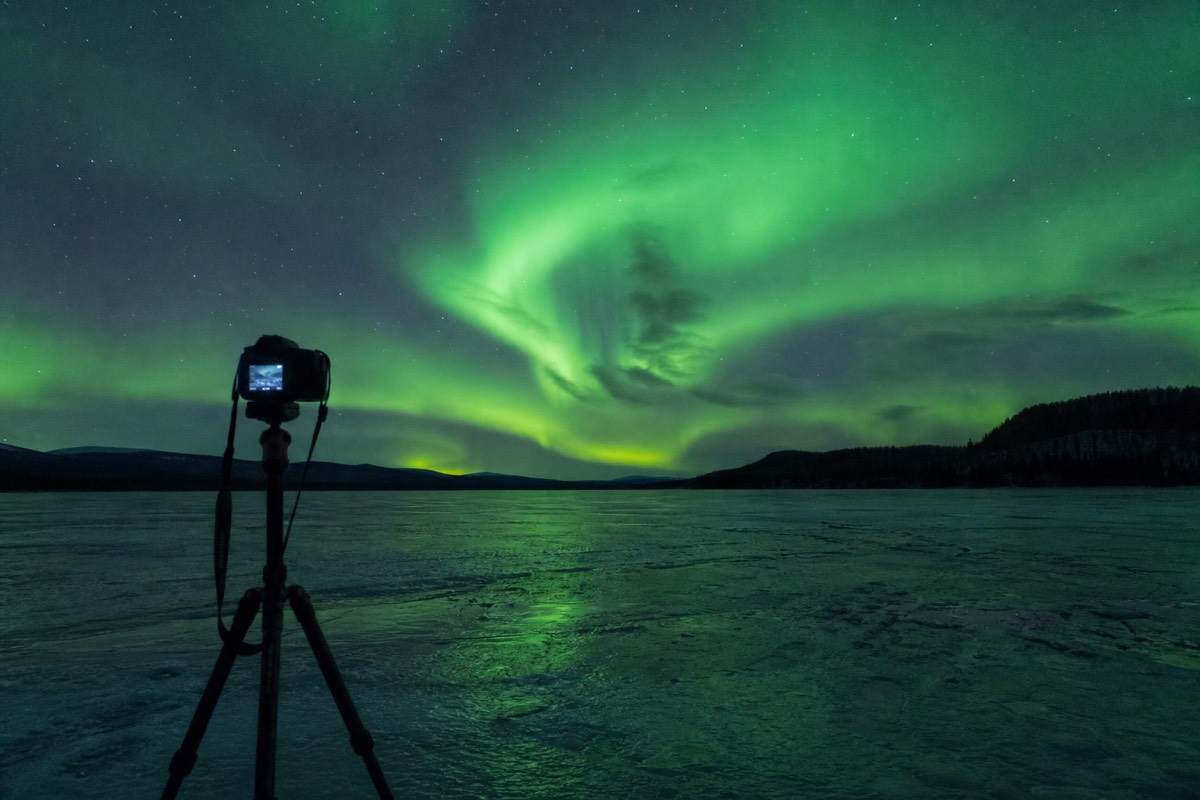
Short answer
A modern phone in night mode captures the aurora well enough for most people, and a camera with manual settings plus a tripod does better. Several Rovaniemi tours include a professional photographer who sends you the images afterwards, which is usually the better option if photographs are the reason you booked. Expect the camera to record more colour than your eyes see, because human night vision is poor at colour.
Someone on the tour will say it out loud within the first five minutes of a display: "it looks better on the camera". They are right, and it is not a trick of the editing. It is how human eyes work at night.
Booking takeaway: For photographs, choose a tour that actually includes a photographer and the finished images. The first choice below includes tripods or a phone mount, and needs 5–7 hours. Explore Rovaniemi aurora photography hunt
Why Does The Camera See More Than You Do?
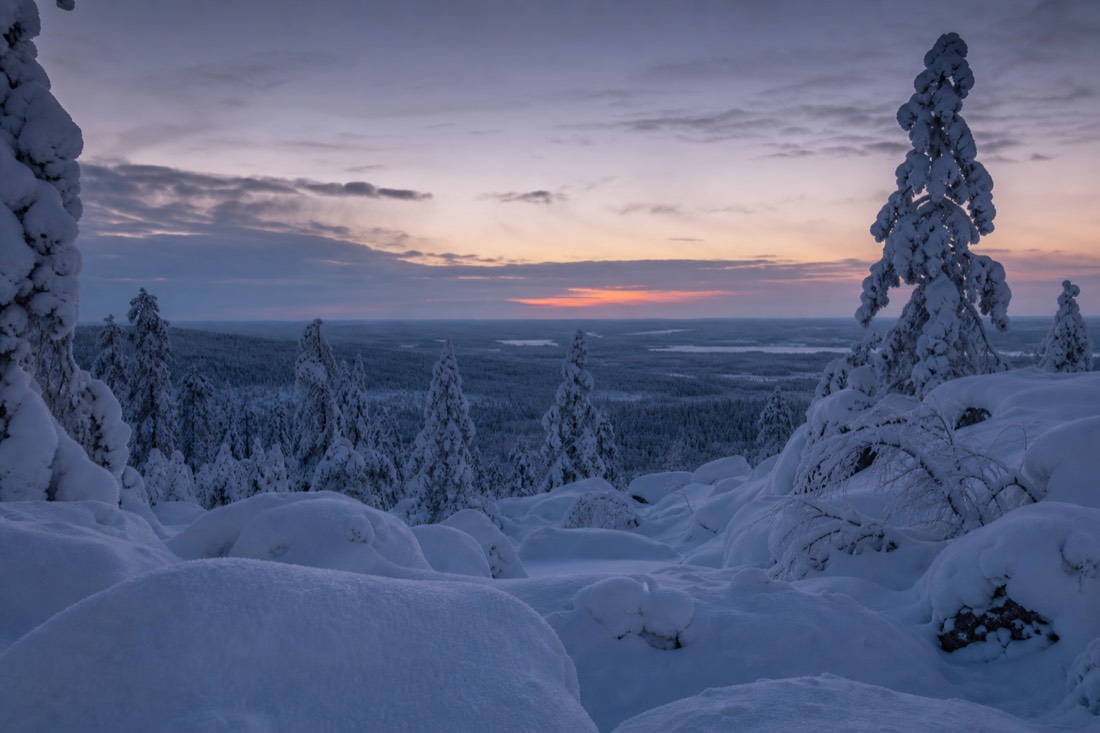
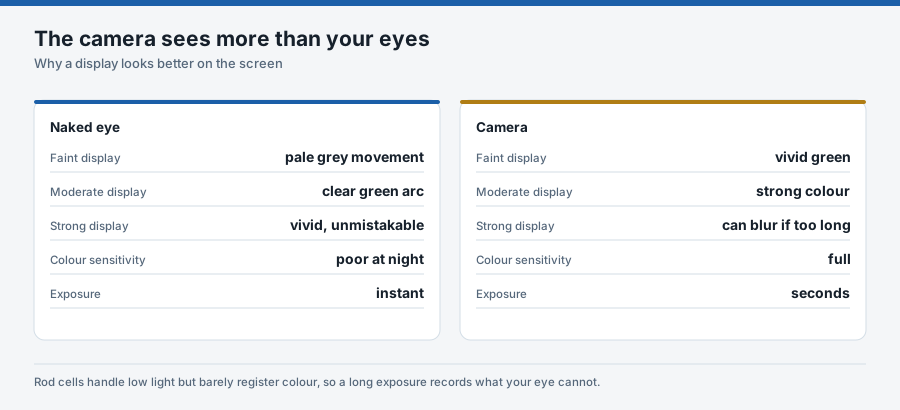
Because your eyes trade colour for sensitivity in the dark. The rod cells that handle low light barely register colour, so a faint aurora that a camera records as vivid green often reads to the naked eye as pale grey-white movement.
This is the single most useful thing to understand before an aurora night, because it manages the expectation that otherwise sours the experience. A weak display looks like a pale, shifting cloud. A strong one is unmistakably green to the naked eye and genuinely spectacular. Both photograph beautifully, which is why the images circulating online are not representative of a typical night.
Nobody is lying to you. The photograph is a long exposure, gathering light over seconds that your eye gathers in a fraction of one.
Do Any Tours Include A Photographer?
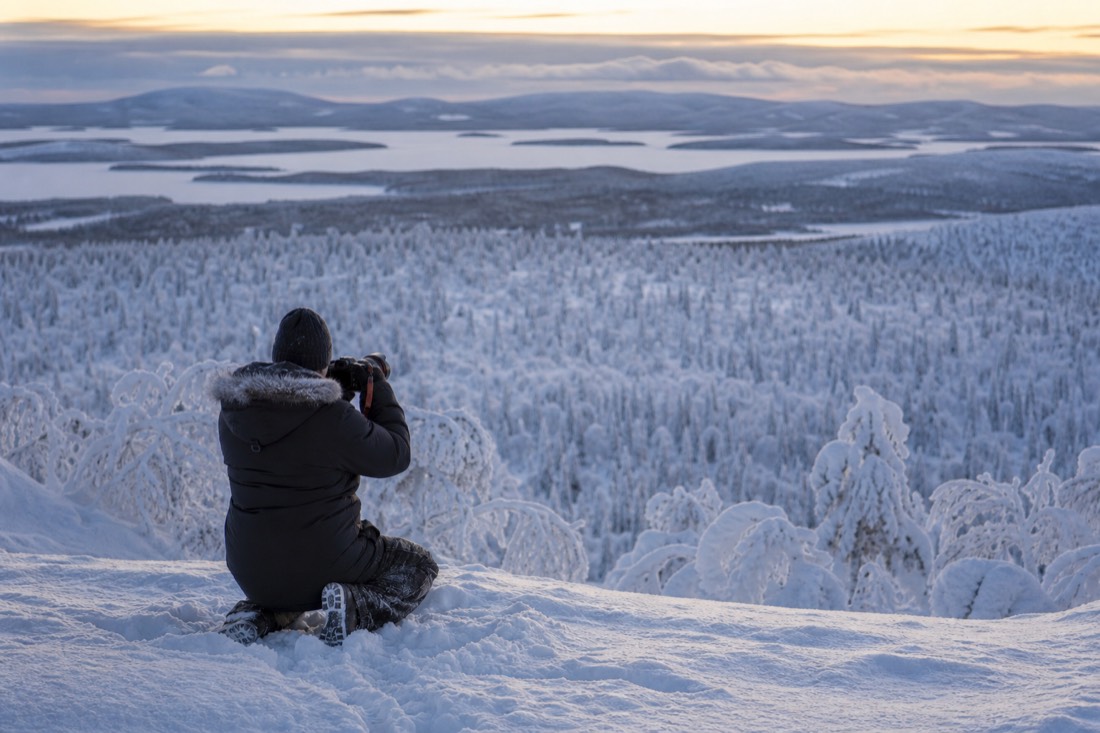
Yes, and it is one of the more sensible things you can pay for. Some Rovaniemi aurora listings include a professional photoshoot and send you high-quality photos and video afterwards by download link.
| What a photo-inclusive tour typically adds | Why it matters |
|---|---|
| A photographer with proper equipment | Long exposures need a tripod and manual settings |
| Images of you with the aurora | Very hard to take yourself in the dark |
| A short tutorial on your own camera | Useful even if you also get their images |
| Files sent afterwards by download link | You are not managing files in the cold |
| Sometimes a partial refund if nothing is captured | A real commercial promise, stated on the listing |
That last row is worth reading carefully on the listing itself. The small-group hunt states a full refund if no aurora is visible in camera, subject to its terms, which is a more specific promise than most operators make. It is a refund term, not a guarantee that the sky will perform, and our aurora guide explains why that distinction matters.
What Can A Phone Actually Do?
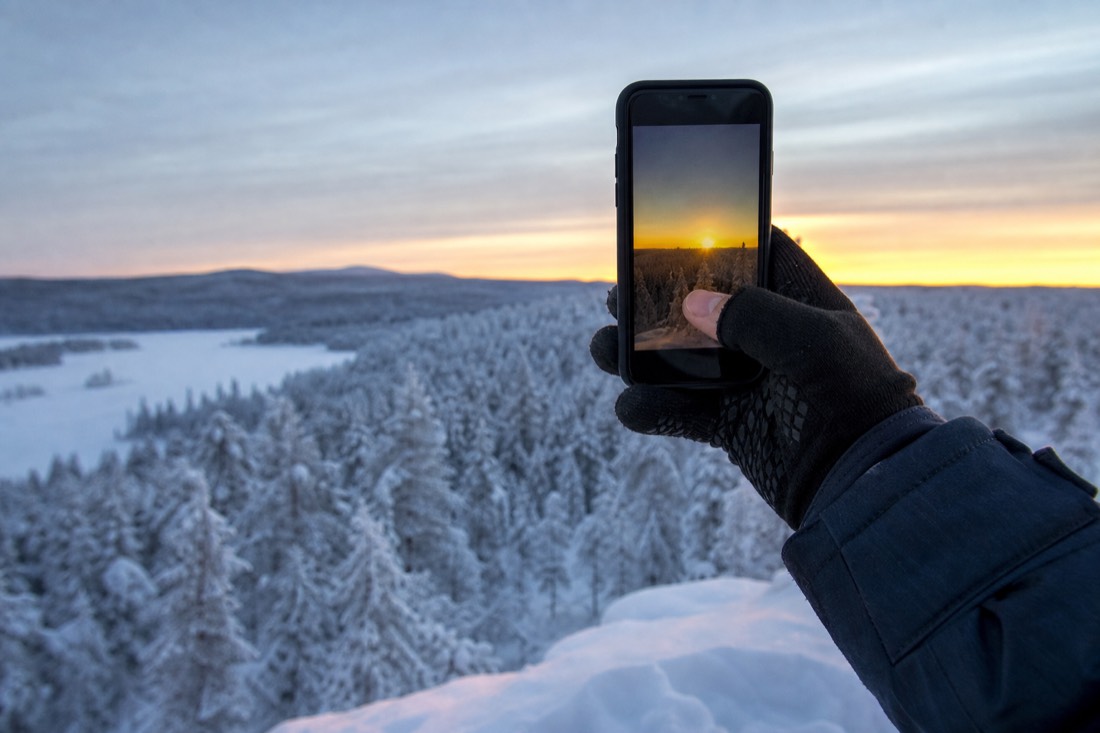
More than people expect. A recent phone with a night mode, held very still or propped on something, will capture a decent aurora. What it will not do is capture you standing in front of it.
| Kit | What it gets | Effort |
|---|---|---|
| Recent phone, night mode, handheld | A recognisable aurora shot | None |
| Phone braced on a wall, car roof or small tripod | A noticeably better shot | Minimal |
| Camera with manual mode and a tripod | The images you see online | Learning and setup |
| Tour photographer | Images of you with the aurora | You just stand there |
The practical constraint is cold rather than technique. Batteries drain fast at Lapland temperatures, so keep a spare in an inside pocket close to your body and swap when one dies. Touchscreens do not work through mittens, which is why thin liner gloves under mittens is the arrangement that works. Our what to wear guide covers that layering properly.
What Settings Actually Work?
If you are shooting manually, the starting point is a wide aperture, a high but not extreme ISO, and an exposure measured in seconds. Then adjust by how bright the display is, because a strong aurora moves fast and a long exposure smears it.
| Display strength | What you see | Rough exposure approach |
|---|---|---|
| Faint, grey to the eye | Pale movement, no colour | Longer exposure, higher ISO |
| Moderate, green to the eye | Clear green arc | Middling exposure, structure still holds |
| Strong, fast-moving curtains | Bright, visibly shifting | Shorter exposure or the shape blurs |
| Overhead corona | Rays directly above | Shortest exposure, widest lens |
The counter-intuitive part is the last two rows. On a strong night, a long exposure records a green smear rather than the curtains you can see, because the aurora is genuinely moving. Shortening the exposure on the best nights is what separates usable photographs from bright green mush.
If manual settings are not something you want to learn on a freezing night, that is exactly the argument for a tour that includes a photographer.
How Do You Check The Forecast Yourself?
Two sources are worth having. The Finnish Meteorological Institute runs a space weather service with real-time aurora probability, and NOAA's Space Weather Prediction Center publishes the underlying solar cycle data.
Use them for what they are good at, which is telling you whether geomagnetic activity is elevated. What no forecast can do is tell you whether the sky above your particular field will be clear in three hours, and cloud is what actually decides most nights in northern Finland.
That is also the argument for a guided tour over standing outside your hotel. A guide with local knowledge and a vehicle can drive to where the cloud is thinner. A forecast cannot do that for you.
Should You Book More Than One Night?
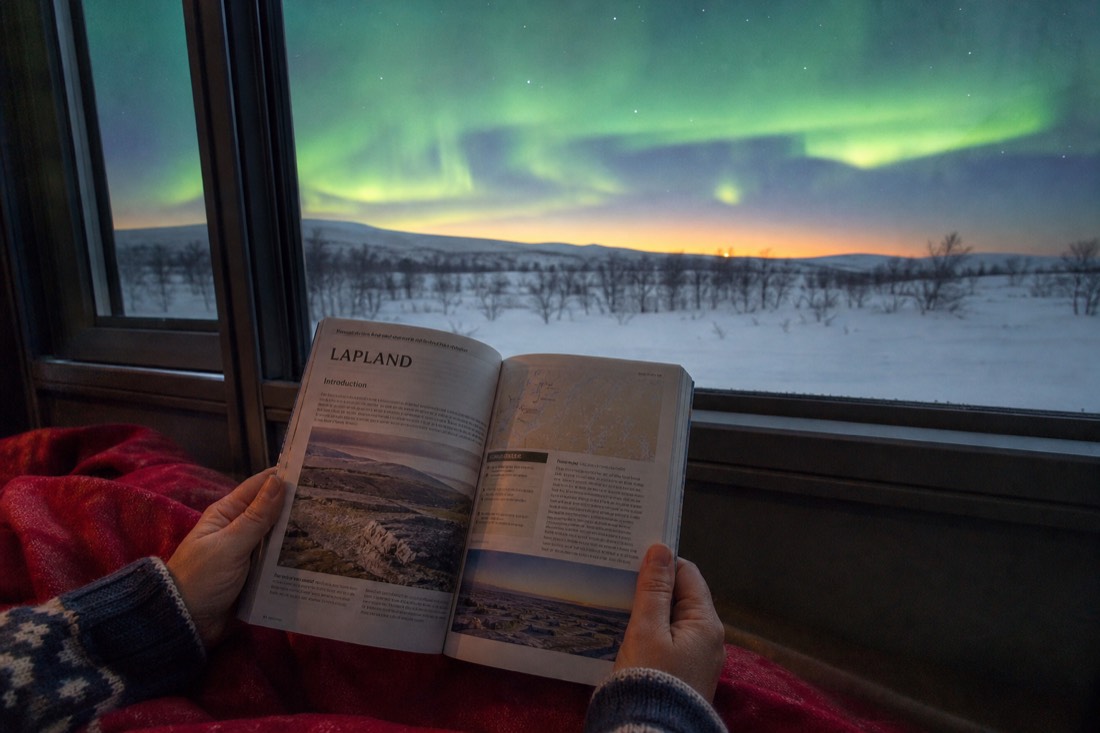
Yes, if photographs are the goal. One night is a coin flip. Photographers who come home with the images almost always booked several nights and accepted that some were wasted.
The arithmetic is in our aurora guide, but the short version is that repetition is the only lever you control. Three attempts across three nights, with most listings cancelling free up to 24 hours before, gives you separate attempts, but each reservation still has its own payment schedule and cancellation deadline.
If you want the images without the equipment or the learning, the aurora category page lists which tours include a photographer, and you can check live availability and prices on the operator's listing for the one that does.
What Ruins Aurora Photographs That Has Nothing To Do With The Camera?
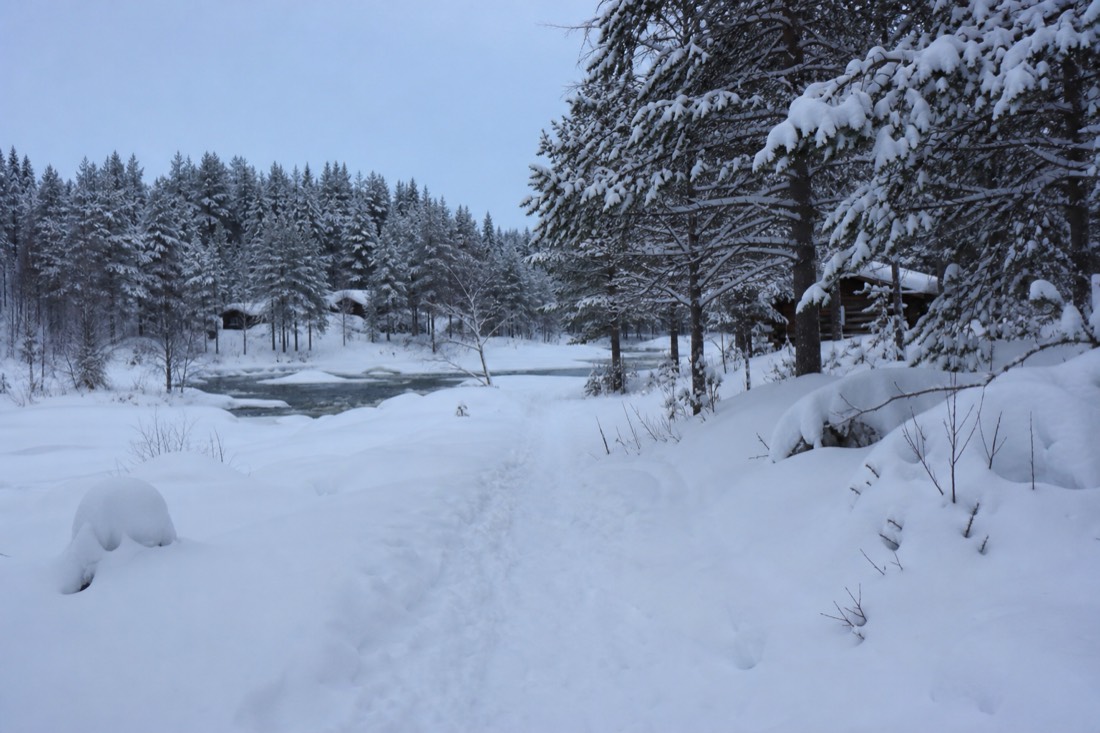
Cold batteries, condensation and a tripod sinking into snow, in roughly that order. None of them are settings problems, all of them are predictable, and every one of them has ended somebody's aurora night while the display was still going.
The camera you brought is almost certainly capable. What fails is everything around it, in conditions the manufacturer never tested for. Rovaniemi's January average sits at -12.2°C on the Finnish Meteorological Institute's 1991 to 2020 normals, and lithium batteries lose capacity fast at that temperature.
| What goes wrong | When it hits | The fix, which is free |
|---|---|---|
| Battery dies without warning | Within the first hour outdoors | Spares in an inside pocket, warmed by your body |
| Lens fogs the moment you go indoors | On the minibus, and then it is over for the night | Leave the camera in a bag until it warms slowly |
| Tripod legs sink and the frame drifts | On soft snow, mid-exposure | Stamp a platform down first, or splay the legs wide |
| Autofocus hunts and locks on nothing | Every time, in the dark | Focus on a distant light or the moon, then switch to manual |
| Gloves come off "just for a second" | Repeatedly, and hands stop working | Thin liners you can operate the dials through |
The condensation one deserves the most attention because it is the least reversible. A cold lens brought straight into a warm minibus or hotel room grows moisture on and inside the glass, and it can take hours to clear. Photographers who have done this once carry the camera in a sealed bag and let it come up to temperature slowly.
There is a version of all this that requires no equipment at all. Decide before you leave the hotel that you will spend the first ten minutes looking rather than shooting, because people who spend the whole display behind a screen consistently report the same regret afterwards.
What Do The Aurora Tours Here Actually Provide For Photographs?
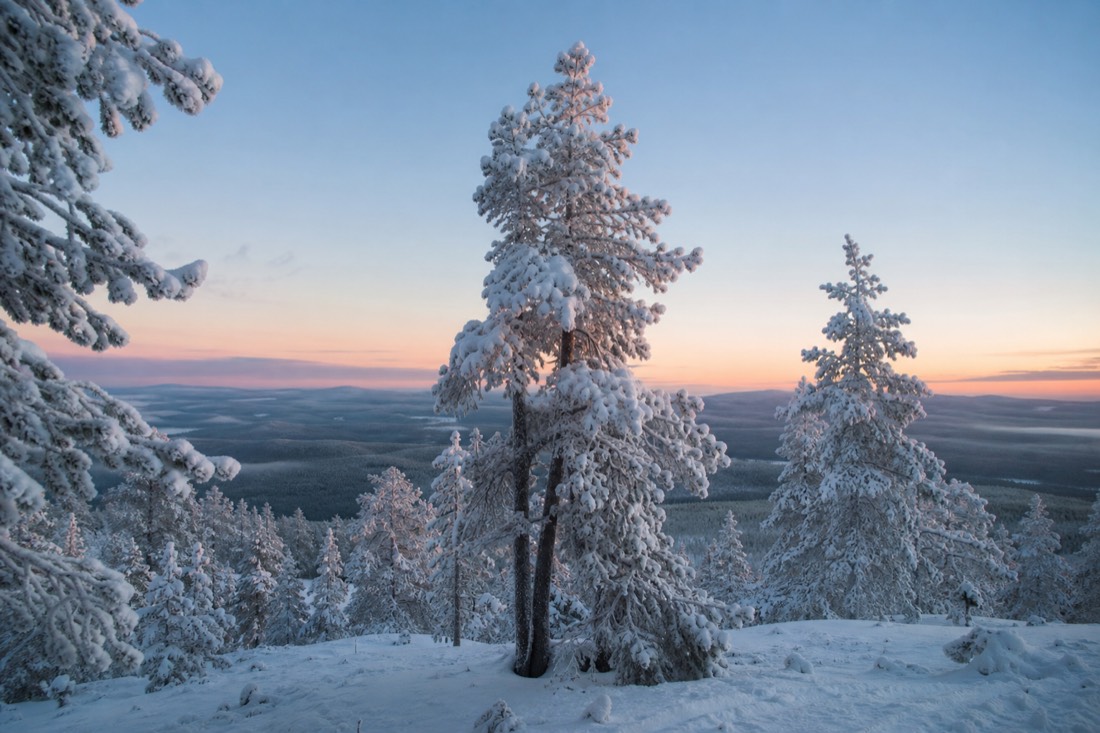
Check the exact offer: several verified Rovaniemi outings include photographs, including the professional photography hunt and the small-group hunt. The older catalogue comparison below is not the whole market; a no-aurora refund is an option-specific term, not a sighting promise.
| Listing | What the listing states about photographs | Verified rating |
|---|---|---|
| Small Group Northern Lights Hunt | Photos under the northern lights included, full refund if no aurora is visible in camera | 4.9 across 348 |
| Northern Lights Tour with BBQ | Not stated, the listing covers guide, gear and campfire food | 4.0 across 1,588 |
| Aurora Borealis and Picnic | Not stated, roughly 2 hours outdoors | 4.1 across 193 |
| Northern Lights Tour by Minivan | Not stated, pickup and guiding only | 4.3 across 189 |
The first row is doing something genuinely unusual, and it is worth understanding precisely. The refund is tied to whether the aurora could be captured by camera, which is a sharper and more testable promise than "guaranteed", and it is a commercial policy from that operator rather than a claim about the sky.
The blank cells are the honest part of this table. Where a listing does not mention photographs we say so instead of guessing, and a guide who is happy to take your camera for a few frames is common without being written down anywhere. Ask at the pickup.
There is a practical reason to prefer the small-group option if photographs matter. A group of eight relocating to a gap in the cloud moves faster than a full coach, and on a night when the sky is only clear for forty minutes, that difference is the photograph.
What Aino Tells People Who Want The Photograph More Than The Sighting
Aino Korhonen has planned Lapland trips since 2023 and by her own count has worked with more than 250 international travellers. The people who come home with the picture they wanted are rarely the ones with the best camera. They are the ones who booked the most nights.
Her first point is the unglamorous one. A modern phone in night mode, held steady against a fence post, produces something most people are happy with. A full camera on a tripod produces something better. Neither produces anything at all on a cloudy night, which is why the number of attempts beats the equipment every time.
The second is about expectations of colour. The camera sees more than the eye does, particularly on a faint display, and a photograph showing vivid green may correspond to a pale grey arc in real life. That is not a trick. It is a long exposure gathering light your eye cannot accumulate. People who know this in advance enjoy a faint display; people who do not feel cheated by it.
The third is scheduling, and it is the same advice as everywhere else on this site. The best window sits around midnight give or take two hours, so a tour that has you home by nine is not really covering it.
| If your priority is | Book | Because |
|---|---|---|
| A usable photograph, minimum fuss | A tour that includes photos | Somebody else handles the cold camera |
| Your own photograph, properly | A small-group tour, several nights | You need time, space and a tripod |
| Just seeing it with your own eyes | Any of them, on more nights | The equipment stops mattering entirely |
| A guaranteed outcome | Nothing, it does not exist | The refunds are refunds, not sightings |
If you are still deciding how many nights to give the aurora, our aurora odds guide runs the arithmetic on one night versus three.
Common Questions
Will the aurora look like the photos?
Usually not to the naked eye. Human night vision handles colour poorly, so a faint display reads as pale grey movement while a camera records it as vivid green. A strong display is clearly green to the eye and genuinely spectacular. Both photograph well.
Can I photograph the aurora on a phone?
Yes, with a recent phone in night mode, especially if you brace it against something solid. What a phone cannot easily do is capture you in front of the aurora, which is what a tour photographer is for.
Do I need a tripod?
For a proper camera, yes. For a phone, a wall, a car roof or a small travel tripod is enough. Long exposures need the camera to stay still, and holding it still in the cold for several seconds is harder than it sounds.
Which tours include photographs?
Several Rovaniemi aurora listings include a professional photoshoot and send images and video afterwards by download link. Our aurora category page shows which, taken from the operators' own listings.
What about batteries in the cold?
They drain much faster than you expect. Carry at least one spare in an inside pocket close to your body, and swap the cold one in to warm up. It will often recover enough for another burst of shooting.
Your next booking step
Editorial starting point · confirm your party’s requirements below
Rovaniemi Aurora Photography Hunt
Have your travel dates in mind? Go looking for clear skies with a professional photographer; tripods and edited photographs are included. Check the outing before arranging the rest of your day.
Allow 5–7 hours. English guide, maximum 8 guests, minimum age 8 and minimum 2 per booking. Warm clothing, boots, drinks and snacks included; pickup within 10 km of Rovaniemi (city-centre guests meet at the office). No sighting guarantee.
Compare options and tailor this choice
Choose only the details you know. These filters help compare outings; the operator confirms suitability and dates.
Party ages and access requirements
Go looking for clear skies with a professional photographer; tripods and edited photographs are included.
Allow 5–7 hours. English guide, maximum 8 guests, minimum age 8 and minimum 2 per booking. Warm clothing, boots, drinks and snacks included; pickup within 10 km of Rovaniemi (city-centre guests meet at the office). No sighting guarantee.
Follow the evening weather on a guided aurora search with photographs sent afterwards.
Ages 1+. 4–6 hours; central meeting at Koskikatu 22. Thermal clothing, hot drinks and cookies included; dinner excluded. Can take up to 48 guests. No aurora refund is subject to the operator’s exact terms; it does not guarantee a sighting.
Chase clear skies in a group of up to eight, with photographs delivered after the outing.
Allow 5–8 hours. Ages 7–75; English guide. Pickup within 10 km of central Rovaniemi. Winter clothes and boots only on request. Operator offers a refund if no aurora appears in camera, under its terms; no sighting is assured.
None of these outings fits those choices. Adjust a filter or reset to compare the original options.
Published departure schedule loading. Availability and final price are confirmed on Viator.
Affiliate links: we may earn a commission if you book, at no extra cost to you. Dates, options and the final price are confirmed by the provider.