Seven Lapland Myths That Refuse To Die
The things people believe about Finnish Lapland that are wrong, from permanent darkness in December to guaranteed northern lights and paid entry to Santa Claus Village.
 By Aino Korhonen, Lapland tour specialist and Arctic experience guide
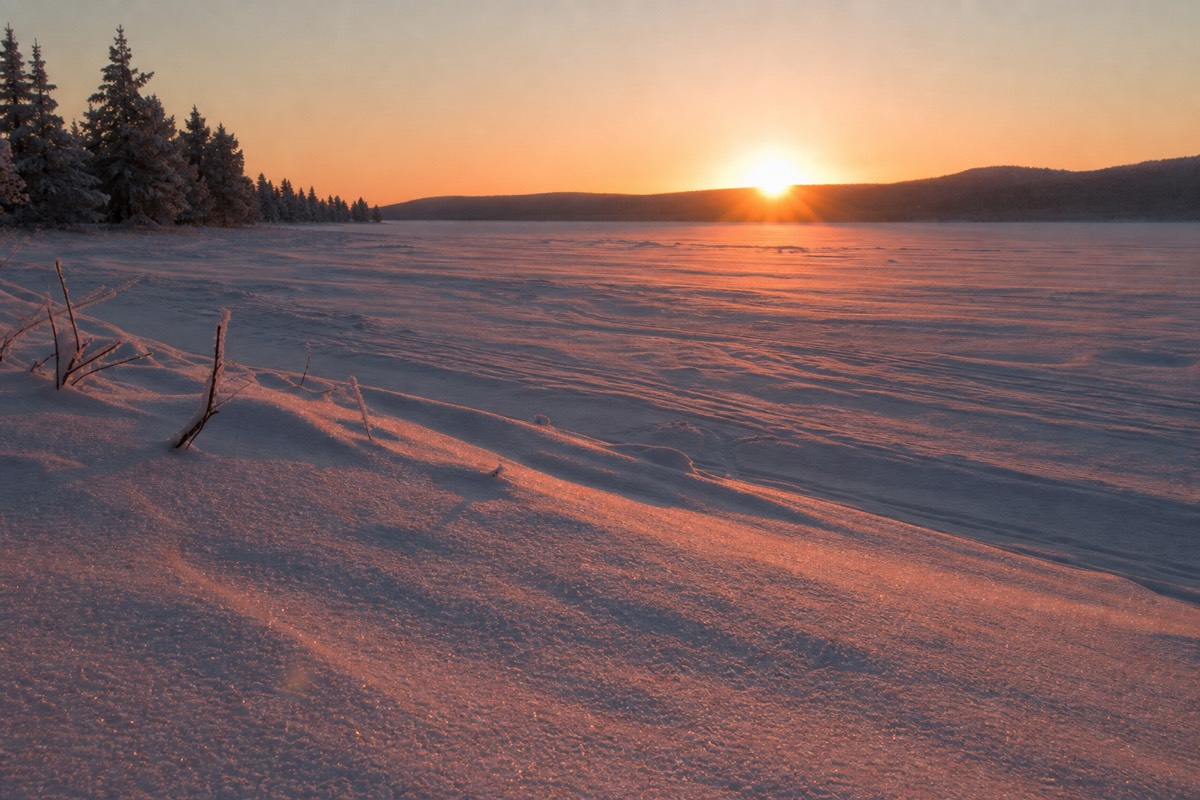
Some of these are marketing. Most are just repetition: one site says a thing, forty others copy it, and eventually it becomes what everybody knows. Here are the seven that cost visitors the most money or the most disappointment.
Booking takeaway: Choose the actual experience rather than the headline promise: a measured husky distance, optional village transport, or an aurora hunt whose outcome depends on the sky. Explore Apukka 6 km husky safari
Myth 1: December Is Permanently Dark
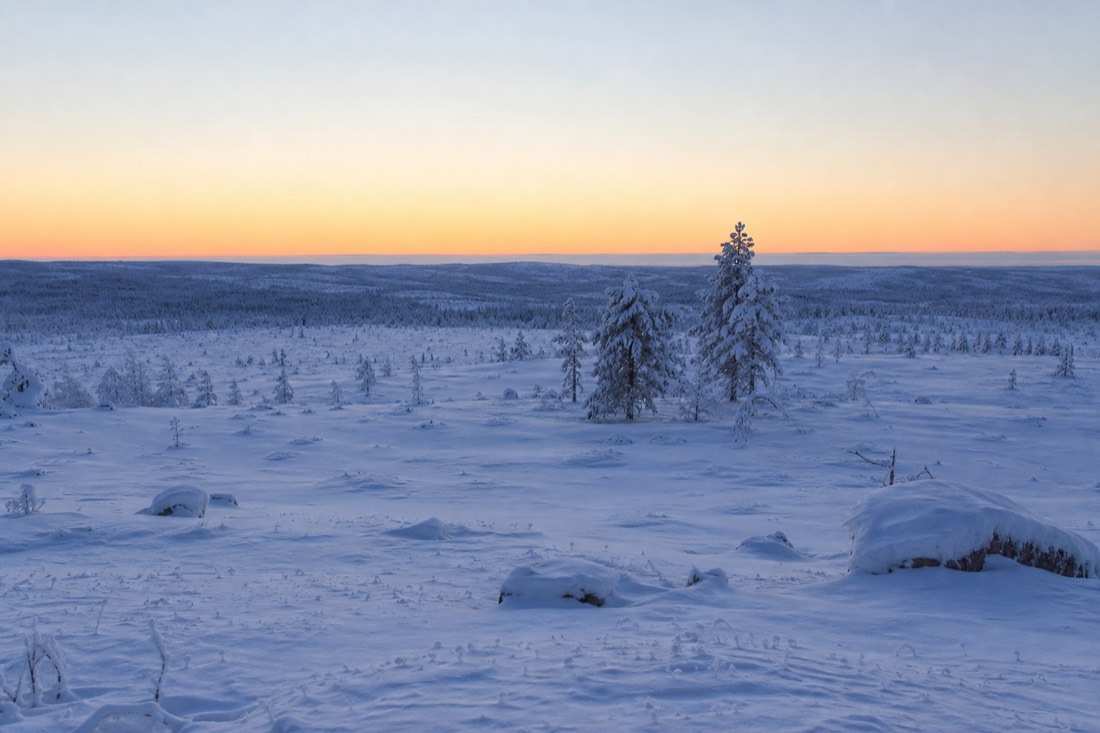
In Rovaniemi, no. The polar night there lasts only a couple of days, because the city sits almost exactly on the Arctic Circle. Midwinter gives you a few hours of low blue light, not twenty-four-hour blackness.
The polar night lengthens the further north you go. Head to Saariselkä or Inari and it runs for weeks. Rovaniemi, sitting on the line at 66°32′37.11″ N, gets the shortest version of it in Lapland.
Some visitors find that a relief and others feel short-changed, which is why it is worth knowing before you book. Our base comparison covers what the latitude difference actually buys you.
Myth 2: You Have To Pay To Enter Santa Claus Village
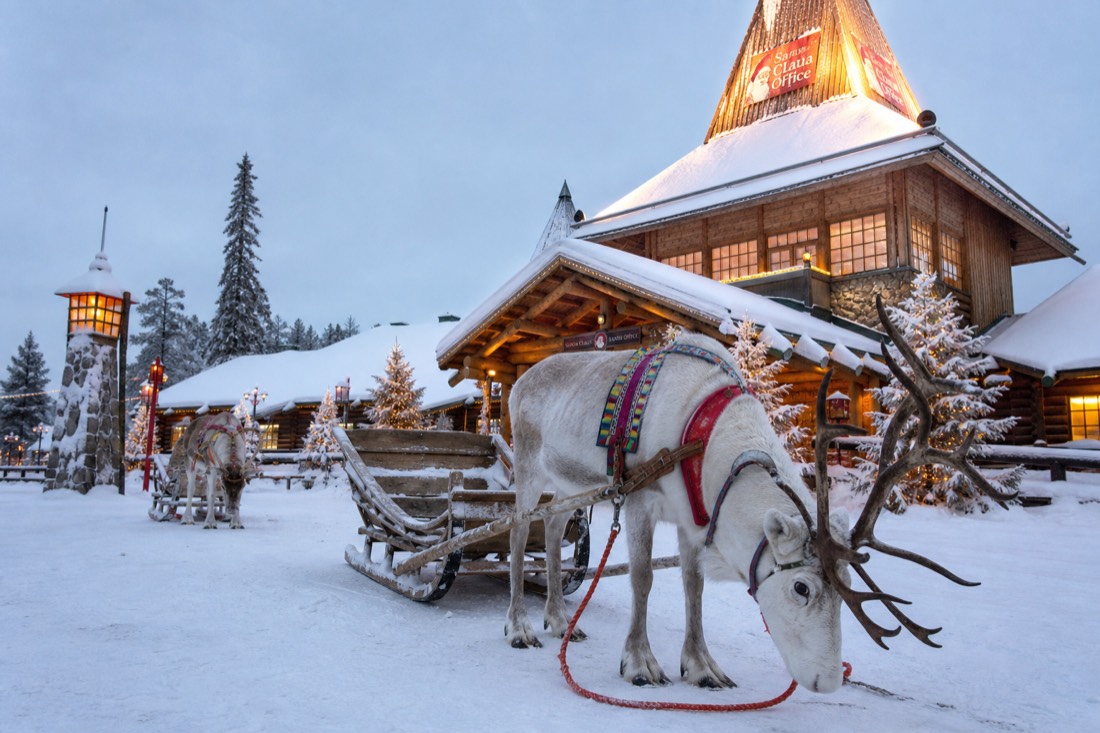
Free, every day of the year, and so is meeting Santa. This one costs real money, because people budget for admission that does not exist.
Both the Santa Claus Village information service and Visit Rovaniemi say so plainly. What costs money is the official photo and video package, from €55 for up to five people. A guided tour buys you the transport, a guide and usually a bundled animal ride, which is a fair purchase for a different reason.
Myth 3: Some Tours Guarantee The Northern Lights
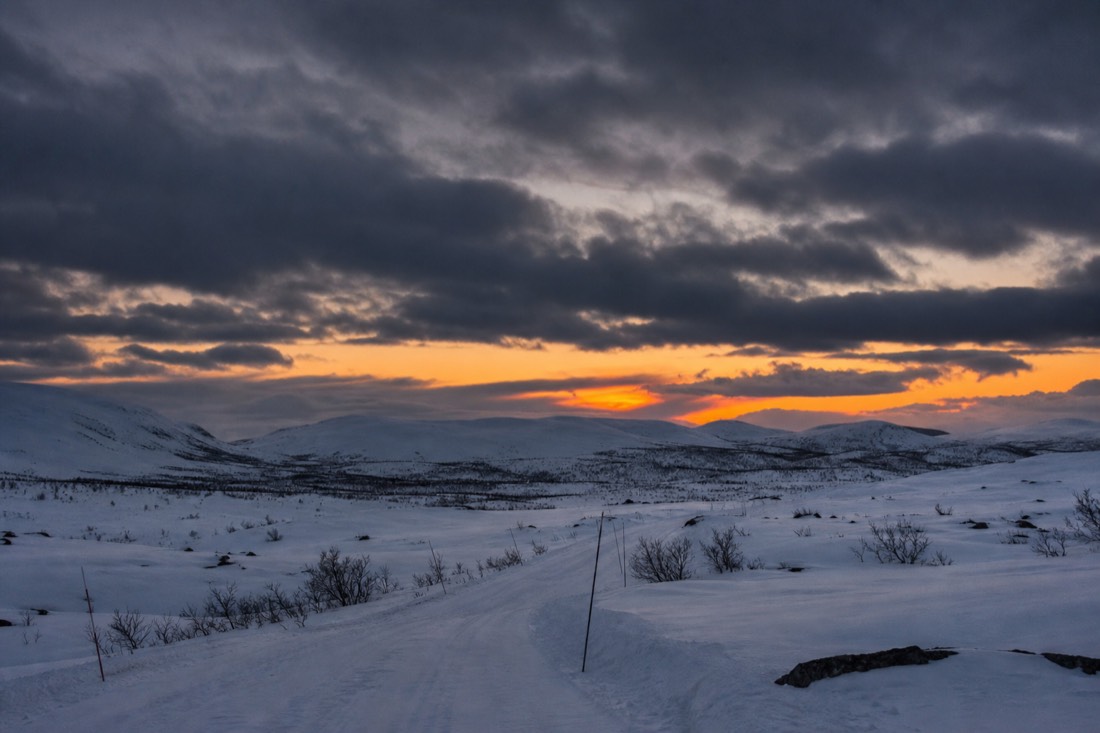
No tour guarantees a sighting. Some offer a money-back or free-repeat promise if nothing appears, which is a refund policy rather than a guarantee, and it is stated on the listing.
| What a listing says | What it means |
|---|---|
| "Guaranteed" in the tour name | Usually a money-back or repeat-trip promise |
| "Full money back if no aurora visible in camera" | A specific, real commercial term |
| "Northern Lights sightings cannot be guaranteed" | The honest standard wording |
| "We chase clear skies" | The operator will drive, which genuinely helps |
| Any site promising you will see them | Selling you something |
The underlying reality does not move: the Finnish Meteorological Institute puts the aurora at roughly 50 per cent of dark, cloudless nights at Lapland ski resorts, and cloud removes a share of the rest.
Myth 4: March Is Too Late For Snow
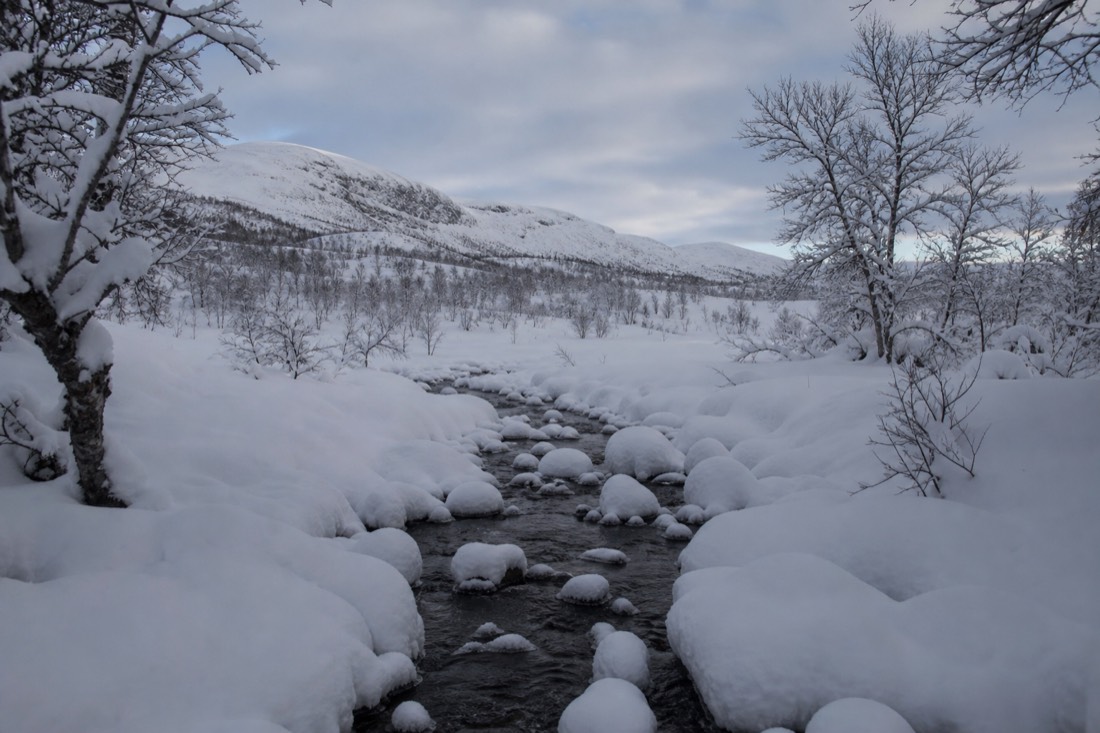
March has the most snow of the entire year. Snow depth in northern Finland peaks around mid-March at 60 to 90 cm, and Lapland's maximum often falls in early April.
Snow accumulates through the season, so the deepest cover arrives at the end of winter rather than in the middle. December has reliable snow, which is all most activities need, but it is still building its snowpack.
This myth costs people money in the other direction: they pay Christmas-fortnight prices for a snowpack that is thinner than the one available in March at a fraction of the cost. Our month-by-month guide lays it out.
Myth 5: A Husky Safari Is Hours Of Sledding
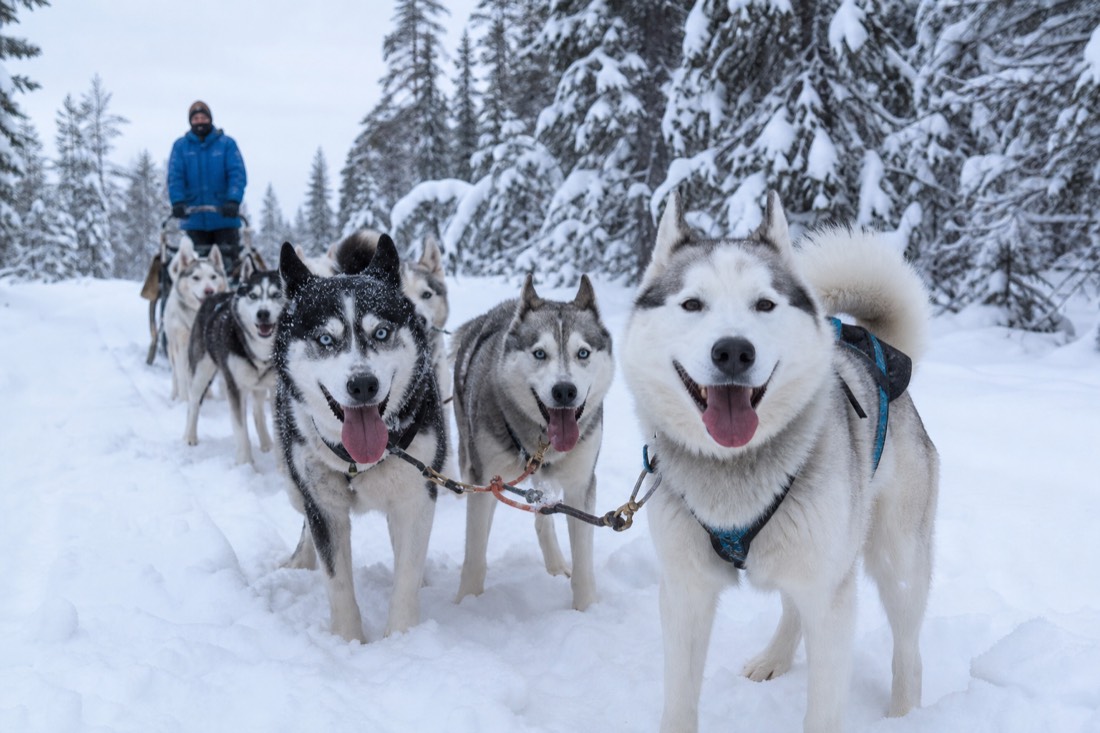
A 6 km safari is roughly twenty-five minutes on the sled. The booking length includes transfer, kitting up, briefing, kennel time and a fire hut.
| What the listing says | What you get on the sled |
|---|---|
| 2 hours | Roughly 20 to 30 minutes |
| 5 km | About 20 minutes |
| 6 km | About 25 minutes |
| 7 km | About 30 minutes |
| 3 hours | Still roughly 20 to 30 minutes, more context around it |
The fix is to book by distance rather than duration. The extra time is genuinely worth having, and our husky guide covers what is in it.
Myth 6: Lapland Means The Whole Trip Is Expensive
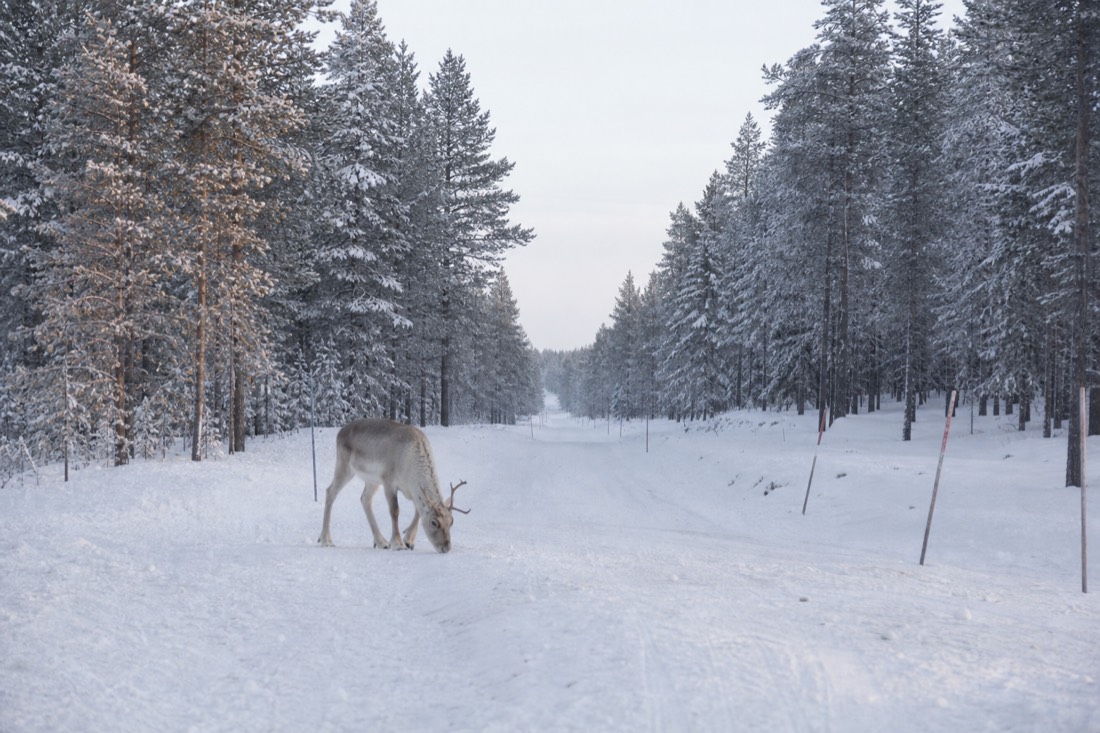
Accommodation at peak is expensive. Almost everything else is Nordic-normal, and the biggest single thing people came for costs nothing.
Rovaniemi hotel rates average around €150 a night, rising to about €280 in the December to February peak. That doubling is the real cost driver. Activities at €89 to €125 per person are unremarkable for a guided Arctic experience, and Santa Claus Village is free.
Where the cost actually sits
| Cost | Reality |
|---|---|
| Rovaniemi hotel, per night | About €150 average, €280 in the winter peak |
| Husky safari | €89 to €125 per person |
| Northern lights tour | €89 to €99 per person |
| Santa Claus Village entry | Free |
| Meeting Santa | Free |
| Official Santa photo package | From €55 for up to five people |
| Glass igloo, peak night | €400 to €990, up to about €1,500 at Christmas |
The bottom row is where budgets actually break, not the activities. Our glass igloo guide is candid about what that premium does and does not buy.
Myth 7: This Is LaplandUK
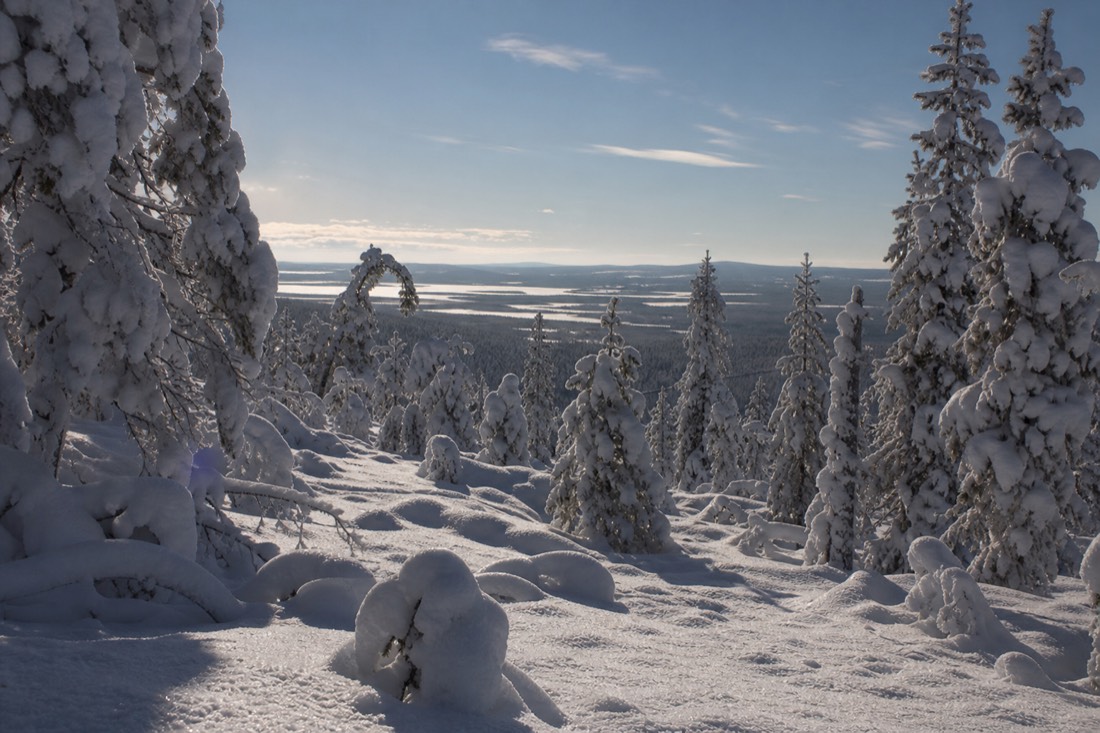
Different place, different country, different business. LaplandUK is a Christmas attraction in Ascot, Berkshire. Finnish Lapland is a region of northern Finland about 2,000 km away.
British search results routinely put the Ascot attraction above the region, which is how the confusion persists. It matters practically: people budget a Finland trip using English attraction ticket prices, or arrive at a search for "Lapland tickets" expecting Finland to sell them.
Finnish Lapland has no admission ticket at all. Our where is Lapland page untangles the two properly.
Three More That Are Half True, Which Is Worse
A myth you can disprove costs you nothing. A half-truth survives contact with the evidence and quietly reshapes the trip anyway, which is why these three do more damage than the seven above.
| The half-truth | The true part | The part that misleads |
|---|---|---|
| "Further north means better aurora" | Darker skies genuinely help | Fewer tours, longer transfers, and attempts matter more than latitude |
| "Small groups are better" | They relocate faster to clear sky | On a daytime husky safari it barely matters |
| "A guaranteed tour means you will see it" | The guarantee is real | It is a refund policy, not a promise about the sky |
The first is the most expensive. Travellers move their base north for darkness and give up the activity market that made them want to come, when three attempts from Rovaniemi beats one attempt from a darker town every time.
The second is genuinely true on aurora nights and close to irrelevant on a daytime safari, where you are on your own sled either way. Paying a premium for a small group at 11am is paying for something the activity does not use.
The third has a specific shape worth knowing. One listing here refunds fully if no aurora is visible in camera, which is sharper and more testable than the word "guaranteed" usually implies, and it is still a commercial policy rather than a weather forecast.
How To Check A Lapland Claim In Thirty Seconds
Every myth on this page survives because checking felt like work. It is not. Three questions kill nearly all of them, and you can ask all three while reading a listing.
| Ask this | Why it works |
|---|---|
| Does the listing itself say this, or does a blog say it? | Most myths live in third-party summaries, not in the operator's own page |
| Is there a number attached, and where did it come from? | "Very cold" hides -12.2°C; "guaranteed" hides a refund policy |
| Would the operator lose money if this were untrue? | Cancellation terms and inclusions are contractual, marketing adjectives are not |
The middle question is the one that does the most work. Half of the claims on this page collapse the moment somebody asks which figure is behind them, and the other half turn out to be real but far narrower than the phrasing suggested.
That is also the standard this site tries to hold itself to. Where a claim could not be confirmed against a primary source, most notably Finnish sled-dog welfare regulation, we say so on the page instead of repeating what everybody else repeats.
The Pattern Behind All Seven
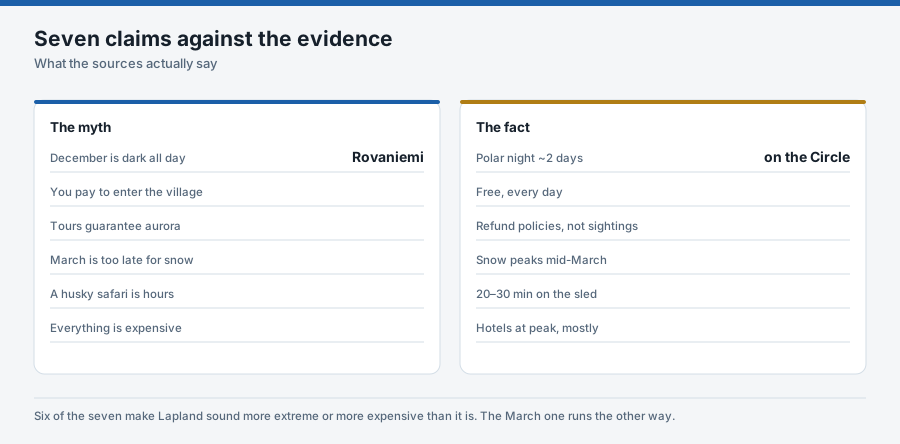
Six of the seven make Lapland sound either more extreme or more expensive than it is. That is not an accident: both make for better copy than the truth, which is a long season, a free village and a sky that does what it likes.
The one myth that runs the other way, that March is too late for snow, is the one that costs travellers the most, because it pushes everyone into the most expensive fortnight of the year for a thinner snowpack. Our budget guide is essentially built on correcting it.
Your next booking step
Editorial starting point · confirm your party’s requirements below
Apukka 6 Km Husky Safari
Have your travel dates in mind? Drive a husky team through the forest, then meet the dogs over a hot drink. Check the outing before arranging the rest of your day.
About 2 hours at Apukka; allow roughly 3.5 hours with transfers. Thermal overall, boots, socks and mittens included. Transfers from Rovaniemi centre or Santa Claus Village. Listed ages 2–75; children ride with an adult; adults must be able to control the sled. Guides do not drive it for you. Not suitable for pregnancy or mobility limitations.
Compare options and tailor this choice
Choose only the details you know. These filters help compare outings; the operator confirms suitability and dates.
Party ages and access requirements
Drive a husky team through the forest, then meet the dogs over a hot drink.
About 2 hours at Apukka; allow roughly 3.5 hours with transfers. Thermal overall, boots, socks and mittens included. Transfers from Rovaniemi centre or Santa Claus Village. Listed ages 2–75; children ride with an adult; adults must be able to control the sled. Guides do not drive it for you. Not suitable for pregnancy or mobility limitations.
Go looking for clear skies with a professional photographer; tripods and edited photographs are included.
Allow 5–7 hours. English guide, maximum 8 guests, minimum age 8 and minimum 2 per booking. Warm clothing, boots, drinks and snacks included; pickup within 10 km of Rovaniemi (city-centre guests meet at the office). No sighting guarantee.
Combine a guided look around Rovaniemi with Santa Claus Village and an Arctic Circle certificate.
About 3 hours with hotel pickup. English guiding. Village entry and meeting Santa are free independently; the paid value is transport and guiding. Photos, food and drinks cost extra. Listing marks wheelchair access; confirm your vehicle and personal requirements before booking.
Compare your actual quotes
Enter total quotes for the same people and inclusions, in one currency. Add transport, gear and supplements before comparing.
None of these outings fits those choices. Adjust a filter or reset to compare the original options.
Published departure schedule loading. Availability and final price are confirmed on Viator.
Affiliate links: we may earn a commission if you book, at no extra cost to you. Dates, options and the final price are confirmed by the provider.